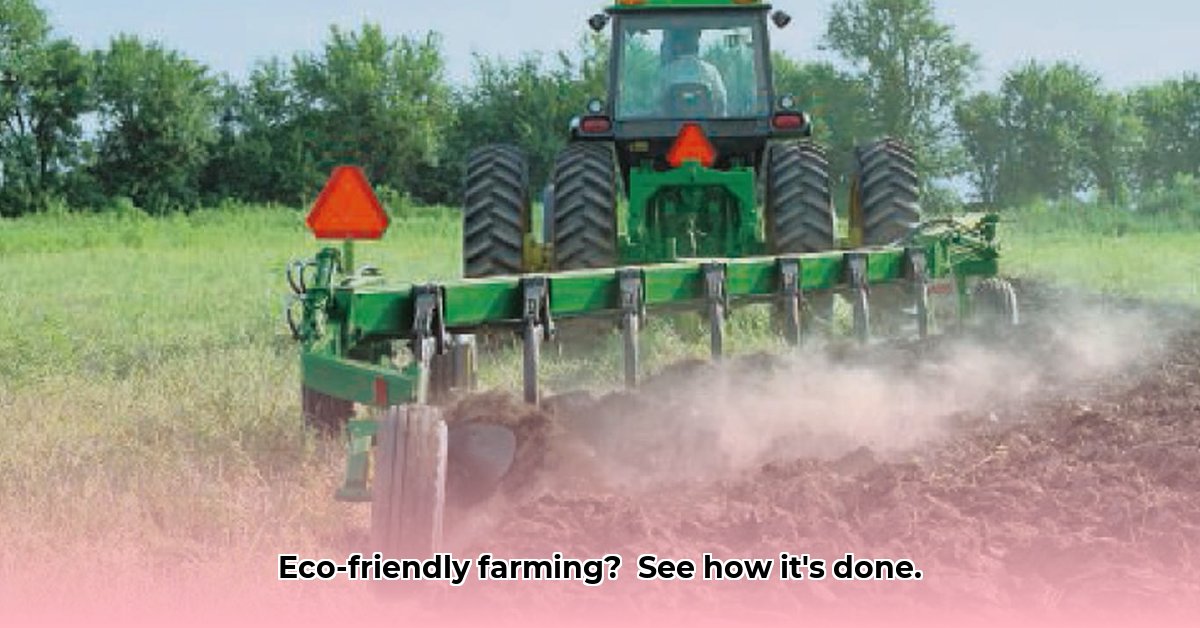
Tractor Plows: A Legacy of Tillage, A Future of Sustainability
For millennia, the plow has been agriculture's cornerstone, transforming raw land into fertile fields. From the simple wooden plows of antiquity to the powerful, modern tractor-drawn implements, these machines have fundamentally shaped our food systems. However, traditional plowing methods, with their deep soil inversion, present significant environmental challenges. This article explores the evolution of tractor plows, highlighting the shift towards sustainable tillage practices that balance productivity with environmental stewardship. We'll examine different plow types, discuss precision agriculture technologies, and provide actionable steps to help you choose the right plow for your farm's unique needs. For more in-depth information on tractor plowing techniques, visit this helpful resource.
The Plow's Evolution: A Double-Edged Sword
John Deere’s invention of the steel moldboard plow revolutionized farming, dramatically increasing efficiency and contributing to significant food surpluses. However, this increased productivity came at a cost. The aggressive inversion of the soil disrupts its delicate structure, leading to erosion, nutrient loss, reduced water retention, and a decline in overall soil health. This deeply impacts the soil's biodiversity and its ability to sequester carbon, exacerbating climate change. The question becomes: how do we harness the power of the plow while mitigating these negative consequences?
Modern Plowing: Precision and Sustainability
Today's farmers are embracing more sustainable approaches. The emphasis is shifting from broad-scale tillage to targeted, precision methods. Chisel plows, for example, aerate the soil without complete inversion, improving drainage and oxygen flow. Mole plows create subsurface channels, enhancing drainage in waterlogged areas. These methods minimize soil disturbance, focusing on addressing specific soil conditions rather than indiscriminately tilling the entire field. This targeted approach is akin to performing precision surgery rather than widespread demolition, maximizing efficiency while minimizing environmental impact.
Choosing the Right Plow: Matching Tool to Task
Selecting the appropriate plow is crucial and depends on several factors. Soil type is paramount; heavy clay requires different techniques than sandy loam. Climate also plays a significant role, with high-rainfall areas demanding specific erosion control measures. Even the type of crop influences plow selection; deep-rooted plants may tolerate more aggressive tillage than shallow-rooted varieties. This underscores the need for a holistic approach, carefully considering the interplay between soil properties, climate, and crop requirements. "There's no one-size-fits-all approach," says Dr. Emily Carter, Soil Scientist at the University of California, Berkeley. "Understanding your soil is the first step towards sustainable tillage."
Precision Agriculture: Technology Meets Tradition
Technology significantly enhances sustainable plowing practices. GPS-guided systems enable pinpoint accuracy, minimizing overlaps and reducing fuel consumption. Soil sensors monitor moisture levels, nutrient content, and other key parameters in real-time, providing farmers with immediate, data-driven feedback. This allows for dynamic adjustments to plowing depth and intensity, further optimizing soil conditions and minimizing environmental impact. This technological integration transforms plowing from a largely intuitive process to a precise, data-driven operation.
Sustainable Tillage Practices: A Step-by-Step Guide
Adopting sustainable tillage practices requires a multi-faceted approach. Here’s a practical guide:
Conduct a thorough soil assessment: Analyze your soil's composition, structure, and nutrient levels to determine its specific needs and limitations. This provides the foundation for choosing the most appropriate plow and tillage strategy.
Select the right plow: Consider the characteristics of your soil and the type of crops you grow when choosing between moldboard, chisel, or mole plows. Each offers different levels of soil disturbance and suitability for various soil types.
Implement precision technologies: Utilize GPS-guided systems and soil sensors to optimize plowing depth, intensity, and overall efficiency, minimizing fuel consumption and environmental impact.
Continuously monitor soil health: Regularly assess key soil indicators, such as nutrient levels, organic matter content, and water infiltration. Adjust your practices based on these ongoing measurements.
Integrate conservation tillage practices: Explore no-till farming or other conservation tillage methods to further minimize soil disturbance and maximize soil health.
Comparing Plowing Methods: A Risk Assessment
The following table summarizes the environmental impact of different plowing methods:
| Plowing Method | Soil Disturbance | Erosion Risk | Water Retention | Nutrient Loss | Carbon Sequestration |
|---|---|---|---|---|---|
| Moldboard Plowing | High | High | Low | High | Low |
| Chisel Plowing | Moderate | Moderate | Moderate | Moderate | Moderate |
| Mole Plowing | Low | Low | High | Low | High |
| No-Till | Minimal | Minimal | High | Low | High |
This risk assessment matrix highlights the trade-offs between tillage intensity and environmental impacts. Choosing the right method requires careful consideration of your specific circumstances.
The Future of Sustainable Tillage: A Blend of Old and New
The future of sustainable agriculture hinges on integrating traditional farming wisdom with cutting-edge technology. Data-driven decision-making, ongoing research, and a commitment to soil health are paramount. This approach, blending established practices with innovative technologies, ensures both productivity and environmental sustainability, paving the way for a more resilient and environmentally responsible food system for generations to come.